
What does it mean for God to be Holy?
/Welcome to the Wednesday Recap!
What is the Wednesday Recap, you ask? Each Wednesday, I recap the discussion from the previous week’s Local table gathering. Each week, The Local meets in various homes around a table to eat, worship, read and discuss the Bible, and pray for each other and our community. Living on mission is our response to the grace and love Jesus has shown us. We share the Gospel and show love to those we encounter where we live, learn, work, and play. While this recap gives people a chance to review, it also gives folks who were unable to gather with us a chance to catch up on what we are learning and working on together. I hope you find it a blessing. Be well, and I will see at our Local table!
Encountering the “other” in our lives
One Summer when I was in high school, I went camping up in the mountains. I remember laying down on the ground and looking up at the night sky. I don’t mean a casual glance. I mean a long, intense gaze.
It seemed to go on forever.
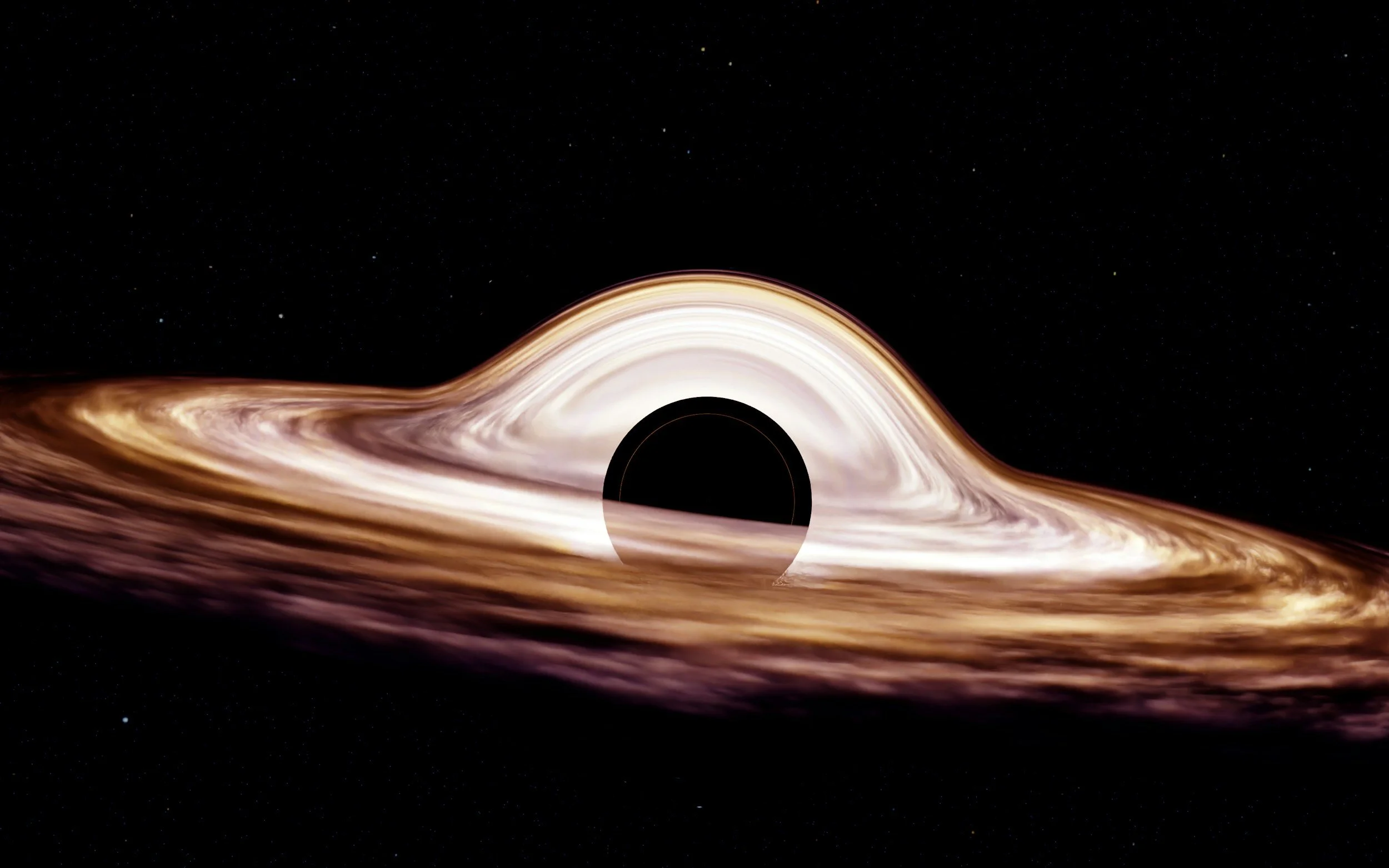
I may have experienced a form of vertigo, and I know I experienced feeling extremely small compared to the vastness of the canopy of the heavens. It was truly amazing. My love for the cosmos has only grown the older I have gotten. Recently, I began really digging into what makes black holes tick. They are truly fascinating! One black hole called Ton 618 is absolutely terrifying.
Astronomers at the Observatorio de Tonantzintla in Puebla, Mexico, saw a fuzzy, blue star and designated it as item 618 in their log. Decades later, with more advanced instruments, scientists would discover that this wasn’t a star, but a hyperluminous quasar powered by one of the largest ultramassive black holes ever discovered.
Ton 618 is estimated to have the mass of over 60 billion stellar masses. We measure certain objects in the universe against the size of our sun. Our sun equalling one stellar mass. So Ton 618 has a mass equal to over 60 billion suns!
Just think about that for a moment.
The space inside the black hole’s event horizon (the point at which nothing can escape its gravity) is 390 billion kilometers wide. Our cute, little solar system would fit inside the black hole 65 times over! It could literally eat our entire cosmic neighborhood for breakfast.
That is truly colossal and terrifying.
Ultramassive black holes like Ton 618 are in a class all to themselves. Scientists are not even exactly sure how black holes this big even exist. When I try to think of something truly awe-inspiring and completely “other” or “alien” to the normal things on earth, Ton 618 certainly fits the bill.
In Matthew 6:9, Jesus hands His disciples a prayer template that bridges two extremes. He commands us to address God as "Our Father in heaven"—an invitation to radical, jaw-dropping intimacy. Yet, in the very next breath, He commands: "Hallowed be your name."
Modern worship culture is incredibly comfortable with God as a friend, a counselor, and a comforting presence.
This is extremely important.
“Pray then like this: “Our Father in heaven,
hallowed be your name...””
People need to know that God isn’t a scary, mean judge who wants to destroy our fun and tell us all of our faults. He’s actually a loving Father who wants to have relationship with us. However, in our pursuit of closeness, we can lose the trembling awe of His holiness.
So how do we see God as a loving Father AND as holy? And what is it to “hallow?”
And more importantly, you ask, what does it have to do with black holes??
The Hebrew Root: What 'Hallowed' Truly Means
To fully grasp what Jesus is calling us to do, we have to look at the linguistic roots.
While the New Testament was written in Greek, Jesus' formatting of prayer aligns perfectly with the Hebrew concept of holiness: the word Qadash (קָדַשׁ). In its most literal sense, Qadash means to be cut off, set apart, or marked as completely unique. It is the exact opposite of the word "common" or "profane.” When we pray "hallowed be your name," we are actively declaring that God's name, His character, and His presence are fundamentally different from anything else in our lives. We are separating Him from the ordinary, treating Him not as a casual resource, but as an infinitely weighty, distinct, and sacred reality.
To further understand what Jesus means, we have to look at what happens when humanity encounters the raw majesty of God.
Isaiah and the Creatures of Pure Fire
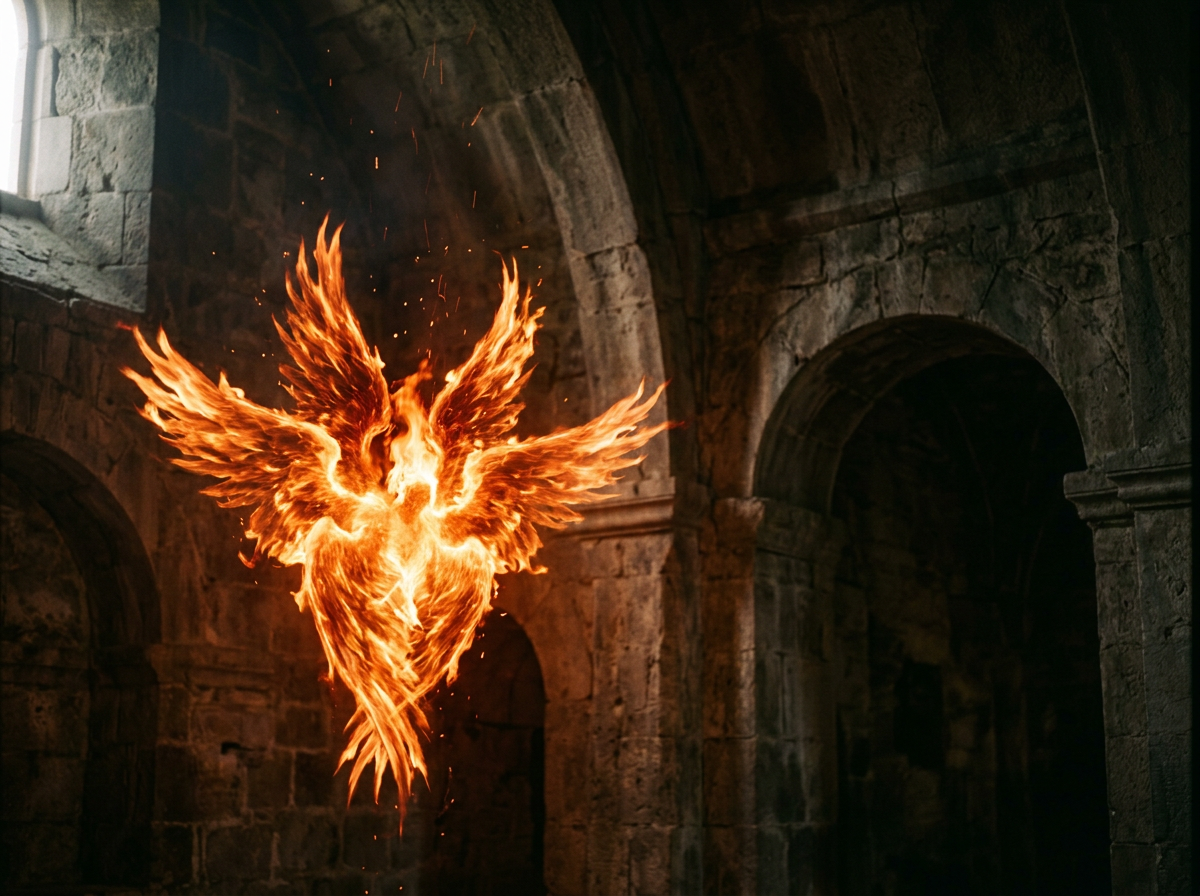
In Isaiah 6:1–5, the prophet is pulled into the heavenly throne room. God is seated high and exalted, and the hem of His robe fills the temple—meaning there is room for nothing else. Flanking the throne are the Seraphim.
Popular culture often imagines angels as gentle, glowing figures in white robes. The Bible paints a radically different picture.
The Burning Ones: In ancient Hebrew, seraph literally means "burning one" or "fiery one." These are celestial beings composed of radiant, consuming fire.
The Six-Winged Shield: Despite being sinless, flawless creatures, the Seraphim use four of their six wings just to shield themselves from God.
Covered Faces: Two wings hide their eyes. Just as human eyes are blinded by staring directly into the sun, the uncreated brilliance of God's majesty is too intense for even the highest angels to gaze upon fully.
Covered Feet: Two wings wrap around their lower bodies. In the ancient world, feet represented earthly limitations and dirt. By covering them, these magnificent beings practice absolute modesty, declaring they are unworthy to be exposed before Yahweh.
They cry out to one another: "Holy, holy, holy." In ancient Hebrew, repeating a word three times is the ultimate superlative. God is not just holy; He is the absolute definition of it.
“Woe is me!”
The Heat of the Altar
Holiness is not just moral purity; it is absolute "otherness." It is like the sun—supremely good and life-giving, but lethal if approached carelessly. Isaiah’s immediate reaction to this perfect holiness is undone ruin:
"Woe is me!"
A staggering detail in Isaiah 6:6 highlights this intensity. When a seraph flies to the altar to bring a burning coal to cleanse Isaiah's lips, the text specifies that the angel used tongs to pick it up.
Think about the implications: A creature made entirely of heavenly, brilliant fire still cannot touch the raw fire of God's altar with its bare hands. The holiness of God is so infinitely hotter and weightier than anything else in existence that even a fiery angel requires an instrument to handle it.
This is exactly why the New Testament warns us in Hebrews 12:29: "For our God is a consuming fire."
Cherubim: The Fierce Gatekeepers
While the Seraphim are the burning worshippers, Isaiah 37:16 introduces us to another elite class of heavenly beings: the Cherubim.
Forget the popular depiction of cute, chubby babies with tiny wings. In scripture, Cherubim are fierce, terrifying, cosmic gatekeepers tasked with enforcing the boundary between the Creator and creation.
The Garden Guard: They first appear in Genesis 3:24, stationed with a flaming sword to guard the Tree of Life after humanity's exile.
The Mercy Seat: God commanded golden statues of Cherubim to overshadow the Ark of the Covenant, guarding the localized presence of God.
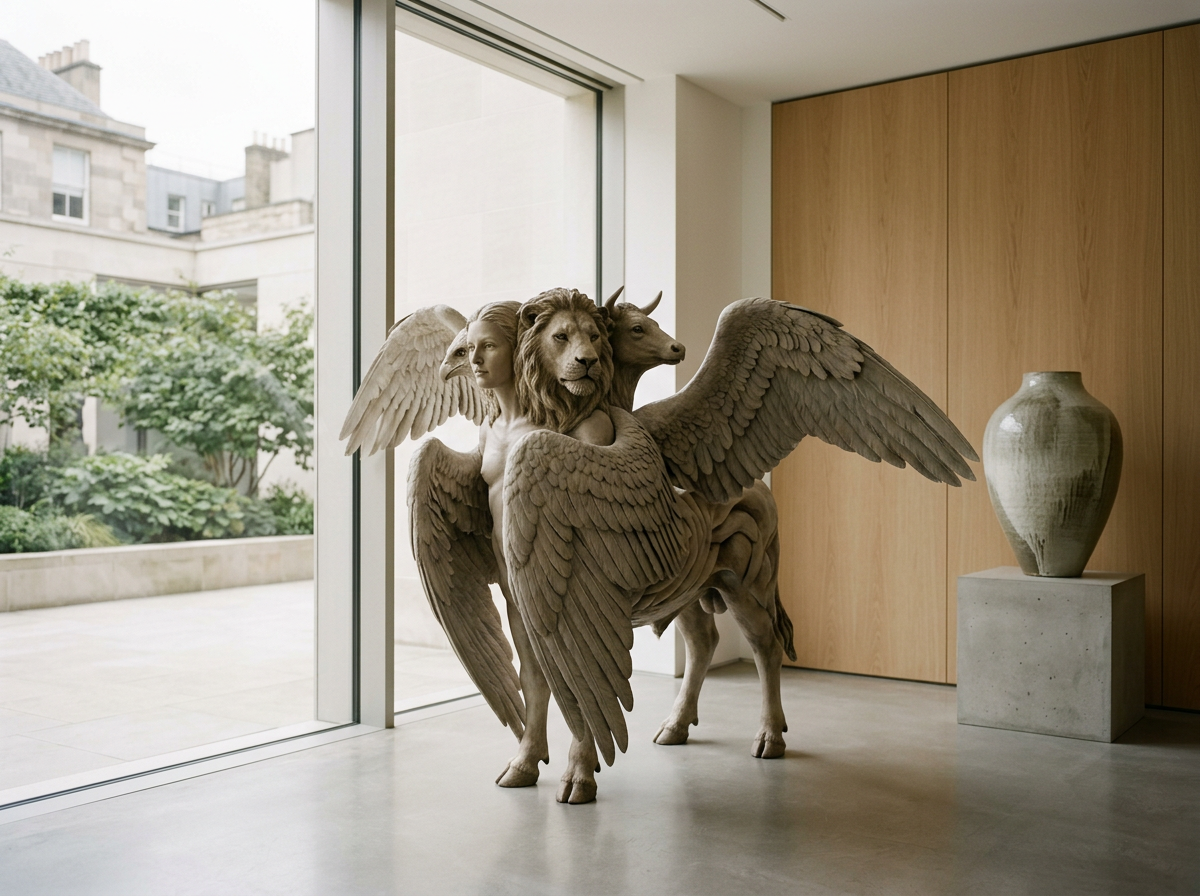
The Cosmic Chimera: Ezekiel 1 and 10 describe them as having straight legs with gleaming bronze calf-hooves that move like lightning.
The Four-Faced Throne-Bearers
Ezekiel reveals that each Cherub possesses four distinct faces looking in all directions simultaneously: a human, a lion, an ox, and an eagle. Furthermore, their entire bodies, backs, hands, and wings are completely covered in eyes. Nothing escapes their watch.
Why these four faces? In the ancient world, these figures represented the absolute pinnacles of creation:
The Human: Supreme intelligence
The Lion: Wild majesty
The Ox: Domestic strength
The Eagle: Soaring mastery
By acting as the physical throne-bearers and chariot for God, the Cherubim represent all of creation bowing in absolute submission beneath the feet of the King.

Holding Intimacy and Intensity Together
When Jesus sits His disciples down on a grassy hillside and teaches them how to pray, He connects them directly to this heavenly throne room in all its majesty and “otherness.”
Yet we don’t have to be afraid.
As awesome and incomprehensible as God is, as illustrated by the Bible AND His spectacular creation (like black holes!), He invites us to be with Him. Abide with Him. Sit down and eat with Him. Live with Him in Heaven forever.
That’s pretty cool, right?
However, never let intimacy cause you to forget intensity. The God we call "Father" is the same unapproachable, terrifyingly holy God of Isaiah’s vision. He is the One flanked by fiery Seraphim who cannot touch His altar, and guarded by multi-eyed, four-faced Cherubim who carry His cosmic chariot.
Isn’t that comforting though? There is nothing humankind can conceive that is higher or greater than God is. He is above all. More powerful than all. All things. All troubles. All sickness. All pain. All death.
When we step into prayer, we are entering a courtroom of absolute majesty. Yet, this is the exact Being Jesus invites us to call Abba.
To hallow His name means to live with a constant, trembling awareness that our Father is a consuming fire. The Daddy who holds your hand is the same Almighty God who commands the terrifying hosts of heaven. He flung stars and awe-inspiring black holes like Ton 618 into the cosmos. He is Daddy. He is Yahweh. True worship requires holding both truths together.
Thank you for reading! If you are new to The Local, welcome! I hope you decide to stay. If you have stumbled onto this blog somehow, and you have gotten something out of these words, please share it with me. You are welcome at our table.